

Landscape lighting does more than look pretty; it keeps paths safer, deters trips and falls, and adds welcoming curb appeal all year long. But the harsh winter weather doesn’t play nice with electronics.
Freezing winter temperatures, heavy rain, drifting melting snow, and wind-blown debris can dim, corrode, or misalign your outdoor fixtures if you’re not proactive. If you’ve been wondering how to maintain landscape lighting through tough seasons, this practical guide walks you through what to check, what to clean, and when to call a pro.
Why Seasonal Maintenance Matters
A little attention now prevents a lot of headaches later. Seasonal landscape lighting maintenance protects your transformer, wiring, and fixtures from moisture, corrosion, and voltage drop, keeping your system bright and efficient.
The result: longer component life, fewer mid-winter outages, and a cleaner, more polished look.
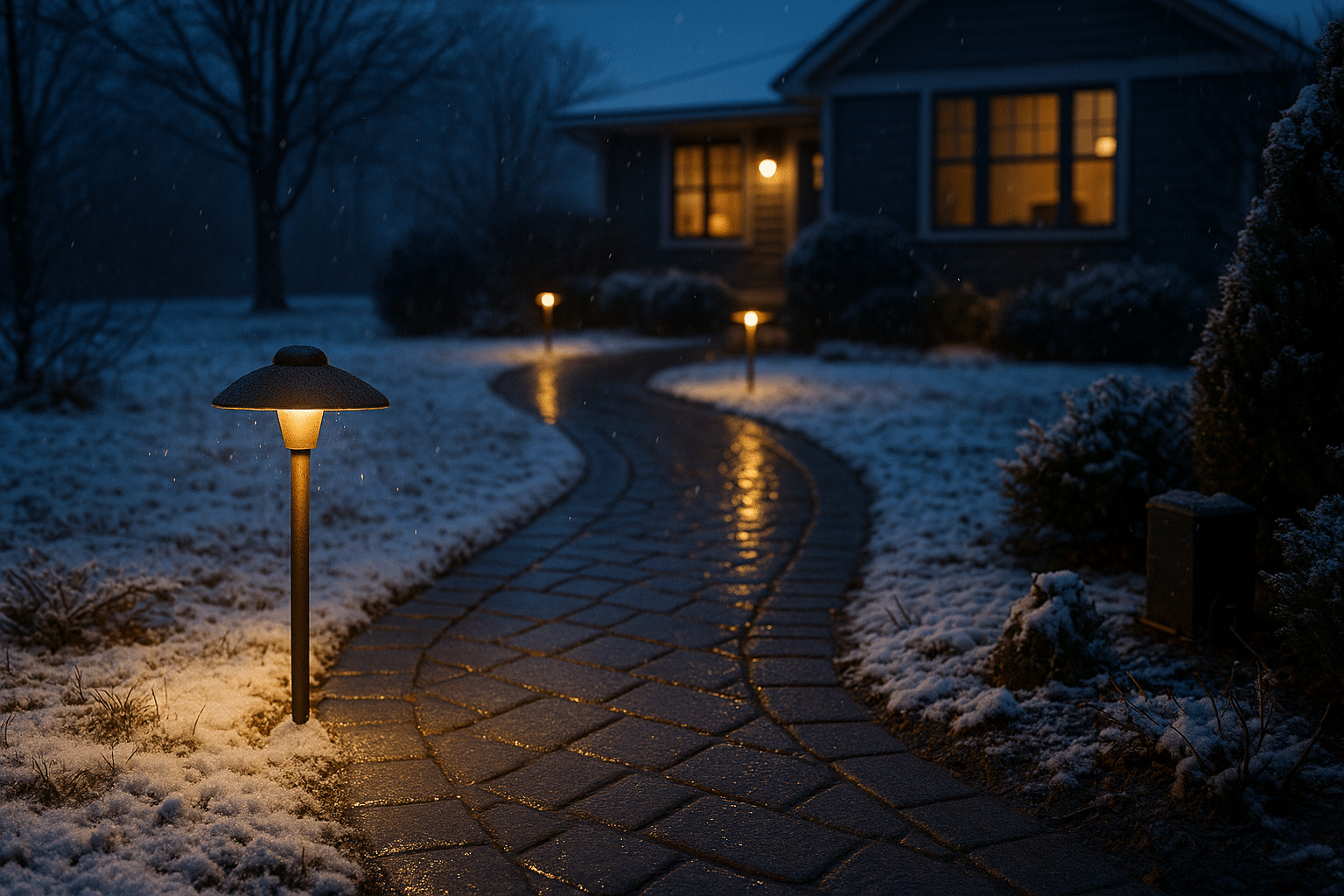
Prep Before Harsh Weather: Baseline Inspection
Map and test your system
- Start by noting your transformer location, wire runs, and zones. Snap quick photos of fixture positions so you can re-aim them after storms or spring growth.
- Press the “test” button on GFCI outlets, confirm the breaker is sound, and use your timer or smart controller’s “astronomical” setting to adjust for earlier sunsets.
Clean and tighten
- Wipe lenses with a non-abrasive cloth; remove hard-water spots for full brightness.
- Tighten loose stakes and knuckles; re-level path lights so beams aren’t glaring into eyes.
- Trim back shrubs and ornamental grasses that creep into beams.
Weatherproof Connections
Open a couple of representative splices and check for water intrusion. If you see corrosion or bare copper, remake the connection with gel-filled, heat-shrink, or silicone-filled connectors. Inspect gaskets and O-rings on fixtures; replace any that are flattened or cracked.
Pro tip: If your transformer cabinet feels damp, add drip loops on every low-voltage lead and keep the door fully latched.
Winter Season Maintenance: Freezing Temps & Ice
Clear Snow the Right Way
Avoid kicking or shoveling directly into fixtures. Use a soft brush to remove accumulation from the path and step lights. If your area regularly sees deep drifts, consider risers or taller stakes to keep lenses above typical snow height.
Guard Against Frost Heave
Freeze–thaw cycles can tilt fixtures and tug on shallow wiring. Re-seat wobbly fixtures, tighten set screws, and re-bury exposed cable to about 6–8 inches where practical. Keep mulch and rock from covering lenses so heat can dissipate and moisture doesn’t linger.
Watch for Condensation
If a fixture fogs, turn the power off at the transformer, open the housing, and let it fully dry indoors. Replace the gasket, add a small desiccant pack if space allows, and reinstall.
Swap any dim or color-shifting lamps; modern LED lights are low-maintenance landscape lighting heroes, cooler running, efficient, and long-lasting in cold weather.
Storm Protocol
During severe ice or lightning events, it’s smart to shut the system off at the transformer. After the storm, reset any tripped GFCI or breakers and recheck your schedules.
Rainy Season Maintenance: Waterproofing & Drainage
Seal it up
Rain finds the weakest point. Inspect fixture caps, lens rings, and gaskets for a snug fit. Put a dab of dielectric grease on lamp bases to discourage corrosion. Re-making any suspect splices with gel or heat-shrink tape alone won’t cut it.
Manage Water Flow
Move fixtures out of downspout splash zones. If a light sits in a chronic puddle, raise it slightly or add a gravel bed for drainage. Ensure the grade around fixtures slopes away from wire splices.
Prevent Corrosion
Prefer brass or stainless fixtures and hardware in consistently wet zones. Check the transformer interior for rust; dry it, clean contacts if safe to do so, and keep the door sealed.
Snow Management: Visibility & Moisture Protection
Keep Paths Clear and Bright
During active snowfall, brush pathway lights daily to maintain visibility for steps and walkways. Angle washers and flood lights slightly so snow doesn’t settle on flat lenses.
After The Plows
Re-aim fixtures that got nudged by shovels or snow blowers and inspect for nicked cable. If you find damage, repair with proper low-voltage splice kits; don’t twist and tape.
Troubleshooting Quick Guide
- Some Lights Out: Check GFCI → transformer fuse → common/tap terminals → individual splices. Rebalance long runs to appropriate voltage taps to combat voltage drop.
- Flickering or Dim: Clean lenses, tighten lamp bases, and replace corroded sockets. Long wire runs may need a hub layout or an additional transformer.
- Water in a Fixture: Power off, dry thoroughly, replace the gasket, and reassemble with desiccant.
- Timer or Photocell Weirdness: Clean the photocell and ensure no fixture is shining directly on it. Update firmware on smart controllers and re-sync schedules after outages.
- Breaker Keeps Tripping: Suspect a short from a nicked cable or waterlogged splice. Isolate runs at the transformer to find the culprit.
Low-Maintenance Upgrades That Pay Off
- Go all-LED: Less heat, less energy, far fewer lamp changes.
- Durable Housings: Solid brass or stainless steel resist corrosion in damp or coastal climates.
- Smart Control: Astronomical timers, app control, and scene dimming reduce runtime and extend component life.
- Better Wiring: Hub or loop layouts with gel-filled connectors simplify future landscape lighting fall maintenance.
DIY vs. Pro: When to Call a Landscape Lighting Maintenance Company
Plenty of tasks are homeowner-friendly: cleaning lenses, brushing off snow, re-aiming fixtures, basic timer updates, and swapping lamps.
But if you’re dealing with repeated GFCI trips, recurring trap moisture inside fixtures, rewiring needs, or drainage redesign, it’s time to bring in a landscape lighting maintenance company.
A professional tune-up typically includes voltage testing, thorough cleaning, re-aiming for seasonal changes, gasket replacements, splice upgrades, and minor re-burials, exactly the kind of landscape lighting maintenance services that keep systems trouble-free.
If you’re searching for landscape lighting maintenance near me or landscape lighting maintenance services near me, look for licensed, insured specialists who warranty their parts and labor and offer recurring maintenance plans.
FAQs
How do you protect landscape lighting in the winter?
Keep lenses above drift height with risers, brush snow gently, replace failing gaskets, and consider LED landscape lights for reliability. During severe ice or lightning, shut off power at the transformer and inspect afterward.
Can landscape lighting get wet in the rain?
Quality outdoor lighting fixtures are designed for wet locations, but only if their seals and connections are intact. Use gel-filled or heat-shrink splices and maintain gaskets to keep moisture out.
How do I keep snow from covering my landscape lights?
Use taller stakes or shields, position landscape lighting fixtures away from plow piles, and brush them during active snowfall to maintain path visibility.
Should I turn off landscape lighting during heavy storms?
Yes, power down during lightning or extreme ice. After the storm, reset the GFCI, inspect the splices and gaskets, and confirm schedules.
How often should I maintain my outdoor landscape lighting system?
Do quick monthly checks, a seasonal (quarterly) clean and re-aim, and schedule an annual professional tune-up for best performance.
Ready for Bright, Worry-Free Nights?
If your system needs a seasonal reset, or you’d like low-maintenance landscape lighting that shines in any weather, Sta-Built Pavers can help.
Our landscape lighting maintenance services keep fixtures clean, dry, properly aimed, and running efficiently through winter, rain, and snow. Reach out today to schedule a tune-up or request a quote.