Serving The Pacific Northwest — Washington & Oregon
Frequently Asked Questions
Get straightforward answers about outdoor living projects, materials, installation, and working with Sta-Built.
General Project Questions
We build paver patios, driveways, and walkways, retaining walls, seat walls, garden walls, and raised bed walls, artificial turf and putting greens, outdoor kitchens, fire pits and fireplaces, and landscape lighting. Most projects combine two or more of these. You can see examples in our real projects.
We serve Western Washington and Northwest Oregon, from Everett south to Portland. That includes Seattle, Tacoma, Olympia, Vancouver, and dozens of surrounding communities. If your city isn’t on our locations page, reach out and we’ll confirm we can get to you.
Most patio, driveway, and walkway installs take 3 to 5 days on site, and most turf lawns take 3 days to a week. Projects that combine pavers with seat walls, fire pits, or drainage work can run up to a week and a half, and turf jobs that add walls, pavers, or a putting green take longer than a plain lawn. Grading-heavy driveways can also take up to a week. You get a schedule before work starts.
Yes. Pavers can be installed in fall and winter in Washington, and turf can go in during winter as long as the base can be graded and compacted. Some weather does pause a job, so your schedule accounts for it. This guide explains what actually stops work and how the base handles rain: Can You Install Pavers in Fall or Winter?.
We build drainage into the base of every project instead of relying on the surface. A typical paver patio gets about 7 inches of excavation, compacted soil, and about 4 inches of packed crushed rock over a fabric layer. Turf goes over a 3.5 to 4 inch crushed rock base and woven geo-textile fabric, so water passes straight through the turf and drains away. Retaining walls get drain pipe and drain rock behind them. Finished surfaces are graded so runoff moves away from your home. Where water is a bigger concern, the choice of paver system matters too; this guide compares the options: Permeable vs. Non-Permeable Pavers.
Yes. When a permit is required, we manage the process from start to finish. Requirements vary by city and, for retaining walls, by wall height, so your designer will tell you at the consultation whether your project needs one.
Usually, yes. Building a patio, fire pit, and seat wall at the same time costs less than adding pieces later, because the crew and equipment are already on site. One thing to know when you combine work: seat walls carry our 17-Year Craftsmanship Warranty, while fire pits, outdoor kitchens, and landscape lighting do not carry a craftsmanship warranty. Your designer can plan the full scope in one visit, even if you build it in phases.
Pavers & Patios
For most patios, walkways, and driveways, yes. Pavers are separate interlocking units, so they flex with the ground through freeze and thaw cycles instead of cracking the way a solid slab can. If a section settles or a paver is damaged, individual pavers can be lifted and reset rather than cutting out concrete. The tradeoff is upkeep: joint sand needs topping up over time, sealing is recommended every 3 to 5 years, and seeds that land in the joints can sprout if they aren’t swept. Read the full comparison: Pavers vs. Concrete.
The work that matters most happens below the pavers. A typical Sta-Built patio gets about 7 inches of excavation, compacted soil, a fabric layer, and about 4 inches of packed crushed rock before the pavers are laid and the joints are filled. Driveways get a compacted base sized for the vehicle traffic and soil conditions on your site. A well-built base is what keeps pavers flat and reduces the risk of settling, which is why our craftsmanship warranty covers the fabric, base, sand, and pavers we install.
Installed right, pavers last 25 to 50 years, and paver driveways commonly reach 30 to 50. They outlast poured concrete because individual units move with freeze and thaw cycles instead of cracking. Basic upkeep, like keeping joints full and sealing every few years, helps them get there.
Some movement is possible. Proper base preparation reduces the risk, but soil conditions, drainage, and tree roots can still cause movement over time. If a section settles because of our workmanship, our warranty covers it, and individual pavers can be lifted and reset without tearing out the surface. Damage from tree roots or acts of nature is not covered by the warranty.
Fewer than you might expect, but some can. Polymeric joint sand resists weeds growing up through the joints, but seeds and debris that land on top of the joints can still sprout. Sweeping regularly and keeping the joints full keeps it to a minimum. More tips: How to Prevent Weeds in Your Paver Patio.
A little, a few times a year. Keep the surface reasonably clean and free of moss, and top up the joint sand when it drops. Our warranty asks that it stay no lower than 3/16 inch below the top of the pavers. We recommend sealing every 3 to 5 years to protect the color, repel stains, and keep joint sand in place, and we can seal at the end of your project or later. See How to Clean Pavers.
Herringbone is the most popular choice for driveways because its interlock holds up best under vehicle load. We also install running bond, basket weave, and custom combinations, and your designer will walk you through the options at the consultation.
Yes. We regularly build patios and walkways under and around decks, homes, fences, and existing landscaping. Your designer assesses the site at the consultation and plans the layout around what is already there.
Retaining Walls
A retaining wall holds back a slope or soil load; a garden wall doesn’t. Because a retaining wall is under constant pressure from the soil behind it, it needs a drainage system and engineering. Garden and border walls are decorative, above-ground walls up to about 18 inches that frame beds, edge a patio, or define a space, with no drainage system required. Anything taller than that, or anything holding back a slope, becomes a retaining wall.
With a proper base, real drainage, and reinforcement where the wall needs it. Every Sta-Built retaining wall gets a compacted crushed rock base, drain pipe and drain rock so water doesn’t build up behind the wall, geo-grid reinforcement on taller walls, and block installation per the manufacturer’s specs. Skipping those steps is why so many walls lean, crack, or fail within a few years, and why repairs get expensive. Learn the warning signs and causes in Why Retaining Walls Fail.
We build retaining walls from natural stone, concrete block, and interlocking pavers. The right choice depends on the load the wall has to hold, the look you want, and your budget, and your designer will compare options for your site.
It depends on your city and the height of the wall. When a permit is required, Sta-Built handles it as part of the project.
Yes. By leveling sloped ground, retaining walls create flat space for patios, lawns, gardens, or fire pits. On hillside lots we often pair walls with paver terraces and steps, with drainage designed to match the slope. For ideas, see Retaining Wall Ideas for a Sloped Backyard.
Very little. Check now and then for cracks or leaning, keep the drainage clear, and keep plants from rooting into the wall.
Artificial Turf
Yes, when the base is built for it. Water passes through the turf into a compacted crushed rock base and drains away instead of sitting on top, so you can use it soon after it rains. Without a proper base, turf can develop low spots, hold water, and pull apart at the seams, which is why we treat the base as the most important part of the install.
We build the base first, then lock the turf down so it stays put. We excavate and compact a 3.5 to 4 inch crushed rock base, lay woven geo-textile fabric, and grade it so water drains through. The edges are nailed at least every 12 inches, and pieces are joined with our Super Seam Method, which uses curved, S-shaped seams that blend into the surface and are less prone to splitting than straight seams. Turf can be cut around curved beds and existing features. Read more: What to Put Under Artificial Grass for Drainage.
It can be, with the right product. For homes with dogs we typically recommend pet turf built for drainage and odor control. Our pet turf is non-toxic and lead-free, with antimicrobial infill, and urine drains through the backing and rinses away with a hose. Nailed edges and locked seams help it hold up to running and digging. The tradeoff is routine rinsing: hose down the spots your dogs use most every so often to keep odor from building. Learn more about pet turf.
It depends on the turf product, how much sun it gets, and how hard the area is used. Worn turf shows it in flattened or thinning fibers and seams that start to separate. A well-built base helps, and when the turf itself wears out it can often be replaced over the same base.
It takes far less work than grass: no mowing, watering, or fertilizing. Rinse it every so often, especially where pets spend time. Clear leaves and debris with a leaf blower or plastic rake, because debris left to sit breaks down on top of the turf. A few times a year, brush high-traffic areas against the grain to keep the blades standing up.
Often, yes. Once the old turf is off, we check the gravel base, regrade it, and recompact it where needed before laying new turf. If the base has failed or drains poorly, it has to be rebuilt.
Estimates, Financing & Warranty
Yes. Estimates are always free and there is no obligation. Plan on about 90 minutes at your home: we walk the yard with you, take measurements, check grade, drainage, and access, and talk about how you want to use the space. It helps to have everyone who is deciding there and a budget range in mind.
A 3D design of your project and exact, down-to-the-penny pricing, usually the same day as your consultation. You see what you are getting before you commit to anything.
Yes. We work with two home improvement lenders, EnerBank and GreenSky, with same-as-cash and multi-year payment options on approved credit. Your designer can walk you through them, or see our financing page.
It depends on what we build. Paver driveways, patios, walkways, and steps carry our 27-Year Craftsmanship Warranty. Retaining walls, seat walls, garden walls, and artificial turf carry our 17-Year Craftsmanship Warranty. Outdoor kitchens, fire features, and landscape lighting do not carry a craftsmanship warranty.
It covers the workmanship on what we build. For pavers, that means settling caused by our workmanship, including the fabric, base, sand, and pavers we install. For turf, it covers the geotextile fabric, crushed rock base, and turf. To keep it in effect, it requires a signed warranty form, payment of the final invoice within 10 days, and basic upkeep like keeping a patio free of moss. It does not cover acts of nature, tree root damage, misuse, lack of maintenance, normal wear, stains, or wear items like joint sand and sealer.
Working With Sta-Built
Yes. Sta-Built Construction is licensed, bonded, and insured in both Washington (WA Lic. STABUL*782LN) and Oregon (OR Lic. 242261).
Our team brings over 50 years of combined experience installing pavers, retaining walls, and synthetic turf across the Pacific Northwest.
We contact you to learn about your project, schedule a visit, and prepare your 3D design and quote. Here is our full design and installation process.
Usually within one business day. If you need us sooner, call or text (360) 338-0533.
Not for most projects inside our service area. If you are near the edge of our coverage, we tell you upfront during your free estimate.
Yes, three: Lynnwood (2027 196th St SW Ste A106, Lynnwood, WA), Olympia (9320 Old Hwy 99 SE, Olympia, WA), and Vancouver (1703 E 4th St, Vancouver, WA), which serves the Portland area.
Don’t see your question? Call or text (360) 338-0533.
Learn More About Outdoor Living
Go deeper on the materials and methods behind a project that lasts.
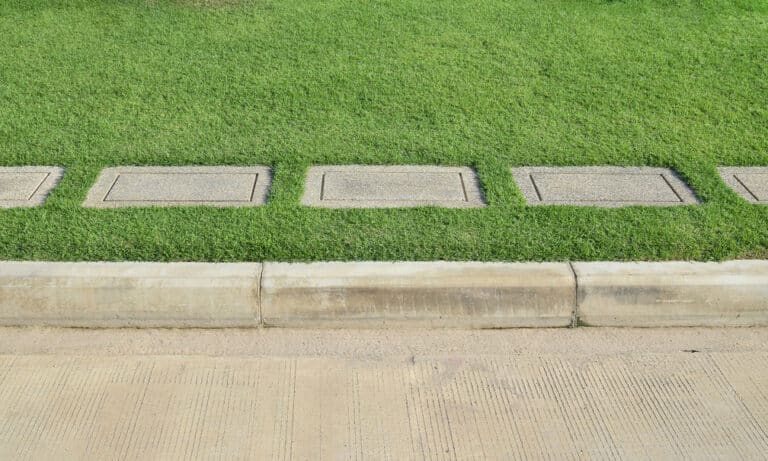
Pavers & Patios
Pavers vs. Concrete: Which Is Better?
How pavers and poured concrete compare on looks, durability, repairs, and long-term value.
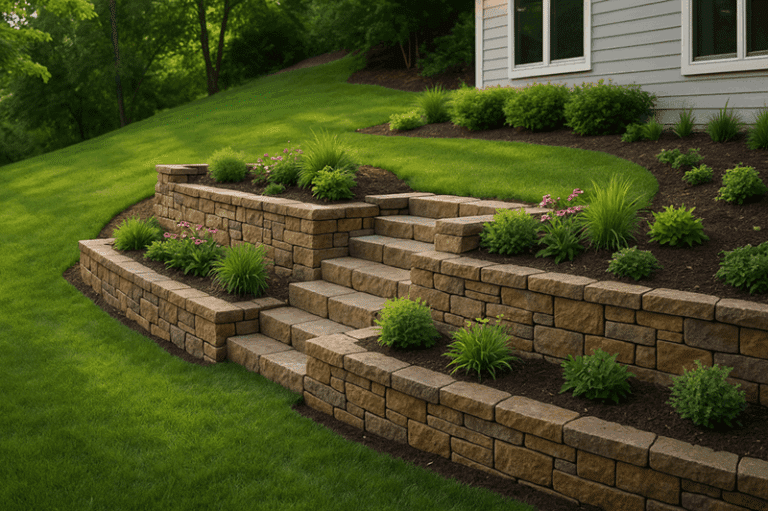
Retaining Walls
Retaining Wall Ideas for a Sloped Backyard
Ways to turn a hard-to-use slope into level, usable space while controlling erosion and runoff.

Artificial Turf
What to Put Under Artificial Grass for Drainage
The base layers that keep turf from turning soggy and smelly, and why they matter in a wet climate.
Why Homeowners Choose Sta-Built
50+
Years of combined experience
Pavers, walls, and turf across the Northwest.
27 & 17
Year craftsmanship warranties
27 on pavers. 17 on walls and turf.
WA & OR
Licensed, bonded & insured
WA STABUL*782LN · OR 242261
Ready to Bring Your Outdoor Living Project to Life?
Our team is here to help you explore your options and take the next step.